How to make hip-hop beats: boom bap drums, swing, sampling and BPM
A classic hip-hop beat is boom bap: a hard kick on beats 1 and 3, a snappy snare on 2 and 4, plenty of swing and a sample on top, at about 80 to 100 BPM. Here is the pattern as a grid, how to swing it, how producers sampled, and how to build a beat step by step.
A classic hip-hop beat is boom bap: a production style that was prominent in East Coast hip-hop during its golden age, from the late 1980s to the early 1990s. Its name is the sound of its drums, boom for the kick and bap for the snare. A boom bap beat loops a hard-hitting kick on beats 1 and 3 and a snappy snare on 2 and 4, swings the rhythm, puts a sample on top and mixes the drums loud and up front. Hip-hop typically sits at about 80 to 100 BPM.
Hip-hop BPM
Hip-hop typically runs at about 80 to 100 BPM, and Ableton's Learning Music gives 60 to 100 BPM for hip-hop in general. Lo-fi hip-hop sits lower, at about 70 to 90, and trap runs near 140 felt at half time. The BPM by genre chart lists each style with its source.
This page covers boom bap. Trap is built differently, on fast divided hi-hats and a deep 808 tuned to sound as a bass note. See what an 808 is, and how to make a beat for the whole workflow.
The boom bap drum pattern
The typical boom bap beat is a loop of quarter notes, with the kick on the first and third and the snare on the second and fourth; the snare on 2 and 4 is the backbeat that many styles share. On the grid this is the same as a straight rock groove; what makes it boom bap is the sound and the feel: the low end of the kick is emphasized, the snare hits hard, and the programming is heavily swung. Producers added percussion and tight syncopation to build on the basic loop. The drum patterns guide has trap, drill and house grids.
How to swing it
Swing quantization keeps some notes exactly on time and pushes the others late. Samplers such as the Akai MPC series let you set the swing amount; in a DAW, look for swing in the quantize or groove settings. Swing works on pairs of notes and delays the second of each pair: at 1/16 every second sixteenth, at 1/8 every second eighth. On the MPC3000, 50 percent is straight and 66 a full triplet swing. These hats sit on the eighths, so set swing to 1/8 to move steps 3, 7, 11 and 15. You can also play the drums in by hand: J Dilla turned quantize off on his MPC3000 for a looser, "drunk" feel. The pads also let producers vary accents and velocity, not just timing.
Sampling
Samples carry boom bap beyond its simple drum loop. Producers chopped records on samplers such as the Akai MPC and the E-mu SP-1200, stretched or squeezed the samples to fit the tempo, and rearranged phrases into new rhythms. DJ Premier often built his choruses from a scratch hook of vocal samples.
Sampling a record without permission can infringe copyright. Clearance, getting permission to use a sample, can be complex and costly, and US courts have disagreed on whether even a tiny unlicensed sample infringes. For sample packs, read the license that comes with each. This is a summary, not legal advice.
Make the kick and bass hit
A common practice in boom bap was to add sub-synthesis under the beat, which raised the level of the bass and made the kick hit harder. The sub-bass guide covers the low end itself.
How to make a boom bap beat, step by step
- Set the tempo between 80 and 100 BPM.
- Pick a hard-hitting acoustic kick and a snappy snare. Program the kick on 1 and 3 and the snare on 2 and 4, add hats on the eighth notes, then set swing to 1/8.
- Find a sample, or play your own chord progression. Check a sample's key and tempo with the key and BPM finder, then chop it, fit it to the tempo and rearrange the pieces.
- Add a bassline or a sub under the kick.
- Add percussion, extra hits or a scratch hook for variation.
- Mix the drums loud and up front, then leave room for the vocal: the beat exists for the rapper to rap over.
Who made boom bap
The term goes back to 1984, when T La Rock used the words "boom bap" for the kick and snare in "It's Yours", and KRS-One's album Return of the Boom Bap made it better known. Key producers include DJ Premier, Pete Rock, Buckwild and Diamond D; Gang Starr, A Tribe Called Quest, Wu-Tang Clan, Nas and The Notorious B.I.G. are among the artists who used it. For a slower, softer take on hip-hop drums and samples, the lo-fi beats guide covers the tempo, seventh chords and texture.
Hip-hop beats with Vitric plugins
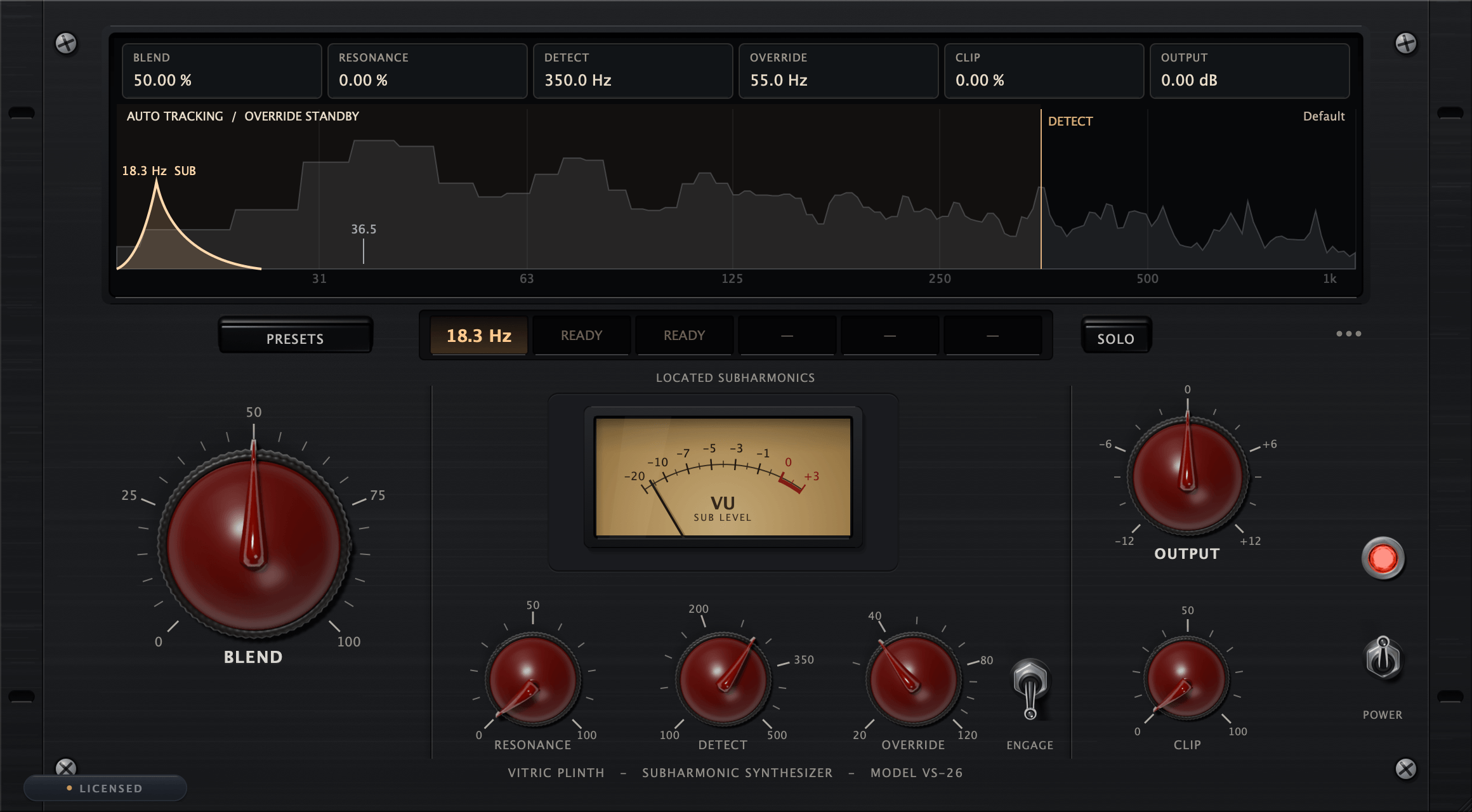
- Plinth Subharmonic Synthesizer adds that kind of sub: it generates a mono sub one octave beneath the fundamentals in your audio, and you set its level with Blend. Use it on the bassline or a pitched kick: very short or unpitched sounds may not give it enough to track.
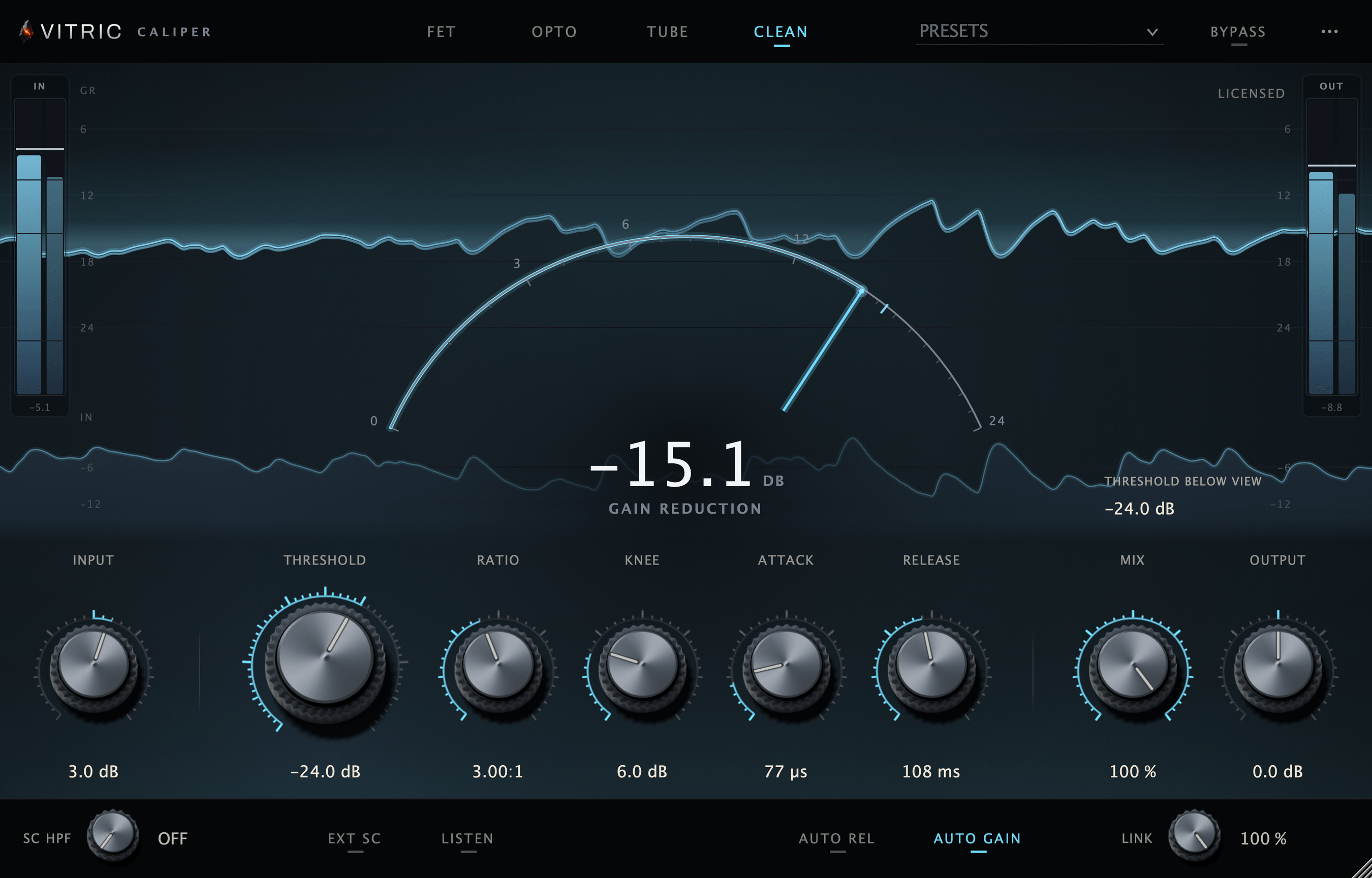
- Caliper Compressor on the drum bus: in FET mode at 4:1 with the attack backed off, it lets the transient through, then grabs the room behind it.
Questions
What BPM is hip-hop?
Typically about 80 to 100 BPM; Ableton gives 60 to 100 for the genre as a whole.
What is boom bap?
A hip-hop production style from the East Coast golden age, late 1980s to early 1990s, built on a hard kick and snare loop (the boom and the bap), heavy swing and samples.
What is the boom bap drum pattern?
Kick on beats 1 and 3, snare on 2 and 4, often with hi-hats on the eighth notes and heavy swing.
Do I need to clear samples?
To use a sample legally, you need permission from its copyright holder, a process called clearance. Sampling without permission can infringe copyright, though some uses may count as fair use.