How to make dubstep: the 140 BPM half-time beat, sub bass, wobble bass and the drop
Dubstep runs at about 140 BPM with the snare or clap on the third beat, which makes it feel like 70, under a deep sub-bass and a wobble bass made by an LFO moving a filter. Here is how to build the beat, the basses and the drop.
Dubstep is bass-heavy dance music from South London, at about 140 BPM with a half-time beat: the kick lands on beat one and the snare or clap on beat three, so the track feels like 70. To make it, program that half-time beat, write a mid bass with a sine sub-bass underneath, make the mid bass wobble with a tempo-synced LFO on its filter, add dark, spacious atmospheres, and build to a drop.
What is dubstep?
Dubstep began in South London in the early 2000s, growing out of UK garage and its 2-step rhythms with a sparse, dub-influenced sound. The Big Apple Records shop in Croydon was a hub: Hatcha and later Skream worked there, and Digital Mystikz (Mala and Coki) were regulars; Benga was another of the early South London producers. From 2001 the Forward night at the London club Plastic People and the pirate station Rinse FM promoted the sound. From the late 2000s a harder style emerged, sometimes called brostep (a name some use as a put-down), pioneered by artists such as Rusko and Skrillex. This guide builds the original UK sound, which Native Instruments describes as garage-inspired beats with half-time kick and snare patterns, dubby influences and huge subby bass lines.
Dubstep tempo and the half-time feel
Nearly always 132 to 142 BPM, according to Wikipedia; a large majority of releases sit at 140, which is why the scene sometimes calls itself "140". Both Native Instruments and EDMProd build their tutorials at 140. Because the snare lands on the third beat, the beat feels like half that, about 70. See BPM by genre for how half-time affects the count.
Step 1: the half-time beat
The snare or clap on beat three is the constant; around it, the rest is up to you. Native Instruments layers metallic side sticks on its snare, adds two quieter extra snares, and plays its sixteenth-note hats and kicks slightly late for a swung feel. EDMProd builds its clap from two samples, a clap and a trap snare, and adds a shuffled shaker loop, a ride and hi-hats. Keep the kick short, too: EDMProd fades its kick's tail so it is not too boomy. For more step grids, see the drum patterns guide.
Step 2: the sub and the mid bass
Pick a key first: both tutorials work in a minor key, EDMProd in E minor and Native Instruments with a bass line on E and G. Native Instruments then builds the bass in two layers: first a throbbing mid-range sound, then a sub made by copying the mid bass's MIDI two octaves down onto a sine-like tone. Its mid bass already sounds an octave below its notes, so the sub lands on E and G at about 41 and 49 Hz. Check where your own sub actually sounds: if your mid bass plays at its written notes, one octave down is usually enough. The sub gives the weight, and the mid bass carries the line on small speakers, which EDMProd also aims for.
Step 3: the wobble
The wobble, often called the wub, is an extended bass note moved in rhythm by a low-frequency oscillator (LFO) changing a synth parameter such as volume, distortion or filter cutoff; both tutorials here put it on the filter cutoff. Wobble the mid bass and leave the sine sub steady, as Native Instruments does. Sync the LFO to the tempo so it locks to the track's grid: Native Instruments sets 3/16 and EDMProd a dotted eighth, which is the same length. At 140 BPM that is about 321 ms, so the filter opens and closes a little over three times a second, and because a dotted eighth is three quarters of a beat, the wobble cuts across the beat for a rolling, syncopated feel. EDMProd keeps the bass moving as the track goes on by modulating its cutoff, FM and drive through macros. For the synthesis itself, see synth bass: sub, reese and wobble.
Step 4: atmosphere
Classic dubstep leaves space. Native Instruments adds chord samples, a short chord stab with a delay of three sixteenth notes for a dubby tail, a long ambience, and a simple lead with plenty of room for its reverb to ring out. Delay throws and reverb on a few sparse elements give the sound its depth without crowding the bass.
Step 5: build to the drop
A typical dubstep track runs intro, main section with a drop, midsection, second main section, outro, and it is very common for the bass to drop after the 16th or 32nd bar. At the drop the percussion pauses, often to near silence, then returns harder with a dominant sub-bass. Many early dubstep tracks have one or more bass drops, a habit inherited from drum and bass. Native Instruments leads into its breakdown with a riser and into the drop with a sweep, bringing the sub in at the drop; EDMProd starts with an 8-bar intro, an 8-bar build, then three 8-bar drop sections (1A, 1B and 1C).
Step 6: mix the low end
EDMProd sidechains the bass so it ducks on each kick (see sidechain compression) and makes narrow EQ cuts around 100 to 300 Hz so the bass does not clash with the kick and clap; if the bass is still not cutting through, it boosts somewhere in the 1 to 3 kHz range. Check the drop on small speakers as well as headphones.
Dubstep with Vitric plugins
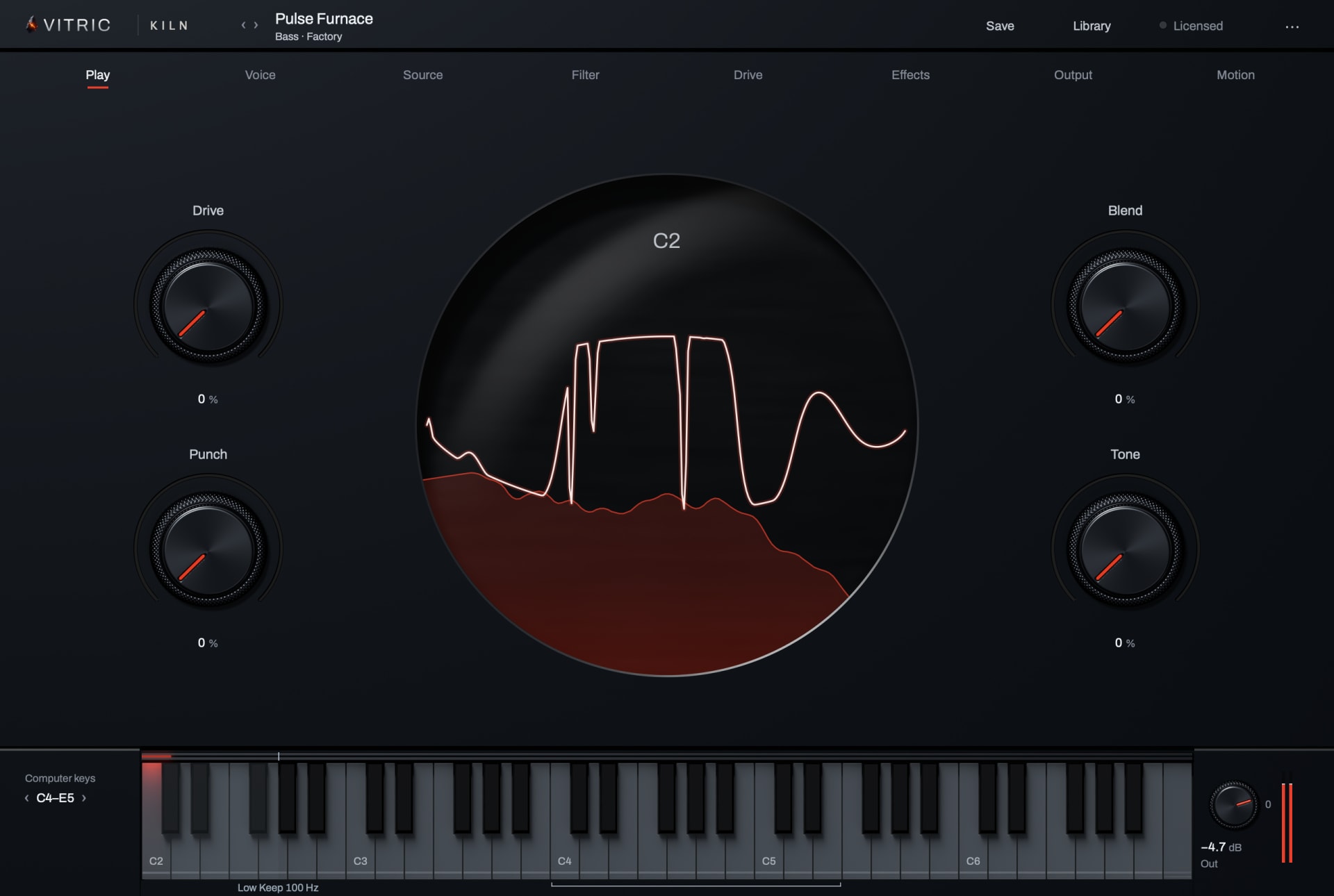
- Kiln Synthesizer: its manual has a filter-wobble recipe (LFO 1 routed to Filter 1 cutoff), each of its four LFOs can follow your DAW's tempo with Sync (the sync rate is set from your DAW's parameter list, 8/1 to 1/64), and its sub oscillator can play a sine one or two octaves below the note. The bass engine adds per-voice drive with a Low Keep that holds the sub clean underneath.
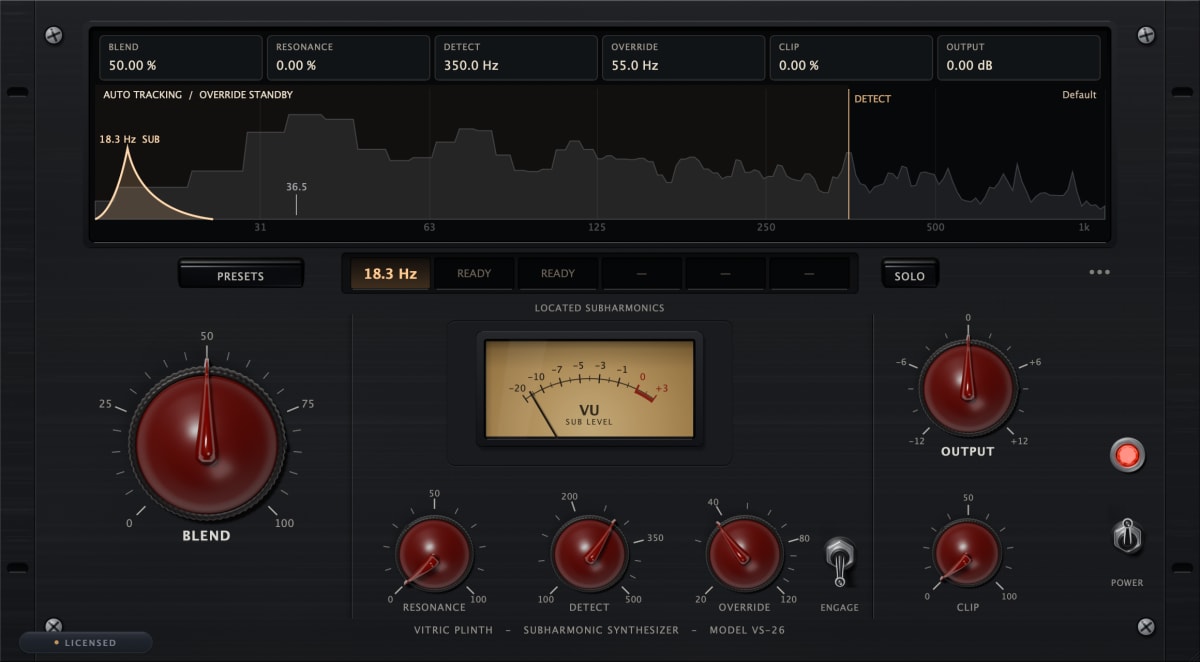
- Plinth Subharmonic Synthesizer: on the mid bass track, it generates a clean sine sub exactly one octave below the notes it detects.
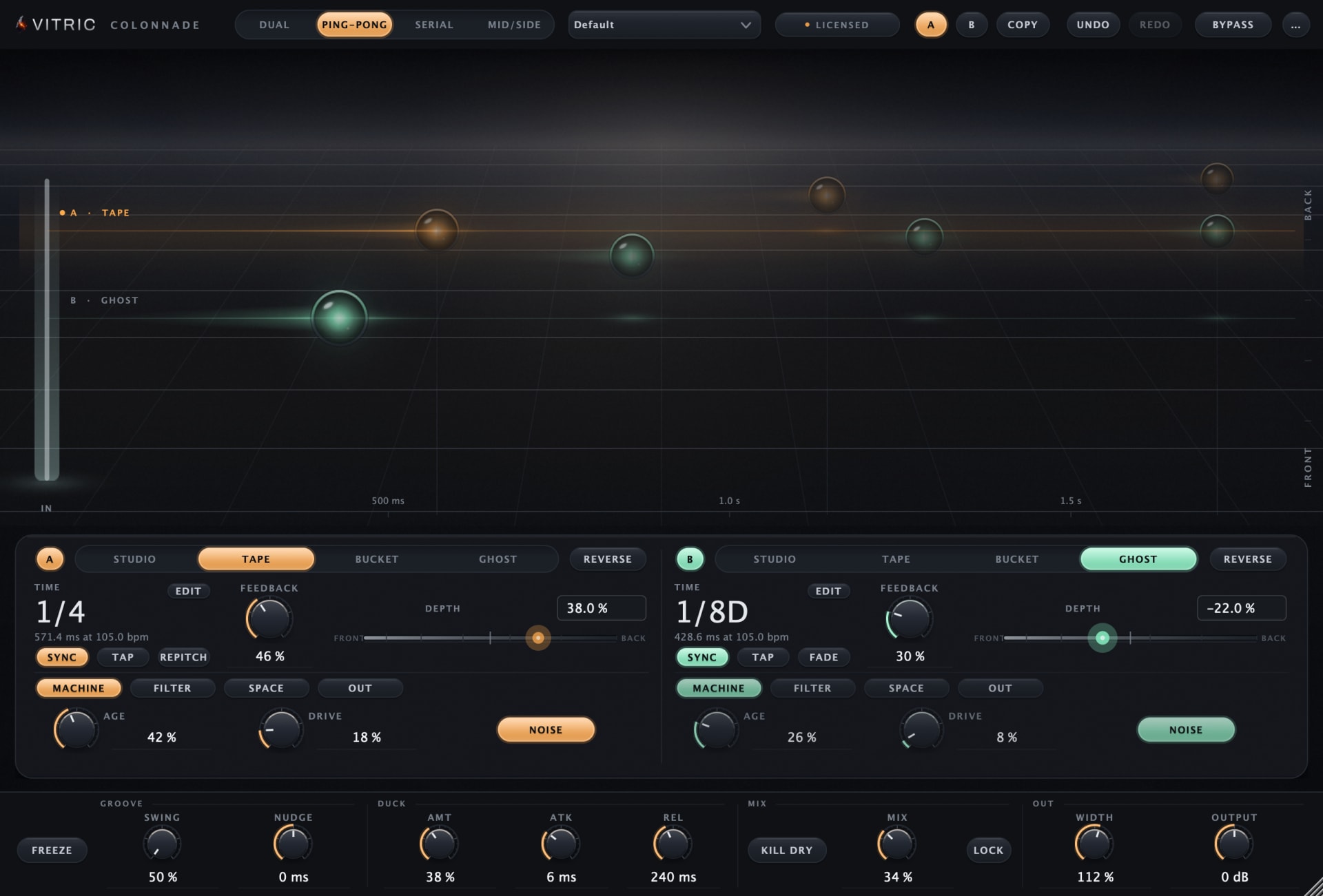
- Colonnade Delay: two delay engines with Studio, Tape, Bucket or Ghost character, routed in parallel, ping-pong, serial or Mid/Side; engine B starts on a dotted eighth, the same three-sixteenth delay Native Instruments puts on its stab.
Questions
What BPM is dubstep?
Usually 140, within a range of about 132 to 142. It feels like 70 because the snare lands on beat three.
How do you make a wobble bass?
Put an LFO on a synth's filter cutoff, sync it to the tempo (both tutorials cited here use a dotted eighth, 3/16) and play a long bass note on the mid bass, with a steady sine sub underneath.
What is the dubstep drum pattern?
A half-time beat at 140 BPM: a kick on beat one, a snare or clap on beat three, and swung sixteenth-note hats.
What is the difference between dubstep and brostep?
Dubstep is the original South London style, sparse and sub-heavy. Brostep is the harder style that grew in the late 2000s and early 2010s, pioneered by artists such as Rusko and Skrillex.