Mixing vs mastering: what each step does, and where one ends
Mixing combines the separate tracks of a song into one stereo file. Mastering takes that file and prepares it for release. Here is what happens in each step, how they differ, and how to tell when a mix is ready to master.
Mixing and mastering are the last two steps of making a record. Mixing combines the separate tracks of a song, such as drums, bass, vocals and synths, into one stereo file: it sets their levels, places them from left to right, and shapes each one with EQ, compression and effects such as reverb and delay. Mastering takes that one finished file and prepares it for release: its final tone, loudness and peak level, and on an album, the order of the songs and the gaps between them.
What happens in mixing
A mix engineer balances the level of each track, places it in the stereo field with panning, shapes its tone with EQ, controls its dynamics with compression, and adds space with reverb and delay. The goal is a balance where every part can be heard and the song feels right as a whole. For a step-by-step order, see how to mix a song.
What happens in mastering
Mastering works on the finished stereo mix. The moves are usually small: EQ to balance the tone, gentle compression, and a limiter at the end to set the final loudness and keep the true peak under a ceiling. On an album, mastering also puts the songs in order, sets the silence between them, evens out their tone from track to track and, for a CD, adds codes such as ISRCs. The result is the master, the file every copy, stream or pressing is made from. For the chain and the checks, see how to master a song.
The difference at a glance
| Mixing | Mastering | |
|---|---|---|
| Works on | Many separate tracks | One stereo file, or a set of songs |
| Main job | Balance the parts against each other | Prepare the finished mix for release |
| Typical tools | Faders, panning, EQ, compression, reverb, delay | EQ, gentle compression, a limiter, loudness and true-peak meters |
| A fix affects | One track at a time | The whole song at once |
| Result | A stereo mix file | The master every copy is made from |
Where mixing ends and mastering begins
A mix is ready to master when the balance is right and nothing needs fixing on a single track. Export it as a 24-bit or 32-bit float WAV, with the peaks below about -3 dBFS in the loudest part and no limiter on the mix bus, so the master has room to work.
If a problem belongs to one instrument, such as a harsh vocal, a boomy bass note or a kick that is too quiet, go back to the mix. In mastering, an EQ cut changes everything in that range: a cut to tame a harsh vocal also takes that range out of the guitars, snare and cymbals.
Do you need both?
For a release, yes. Even a simple master sets the final loudness and keeps the true peak under a safe ceiling for streaming and lossy encoding: see LUFS targets for streaming. Many home producers mix and master their own songs. A separate mastering engineer adds fresh ears and a dedicated listening room built for accurate monitoring. If you master your own mix, take a break first, so you hear it as a listener would.
Mixing and mastering with Vitric
- Vitric Master masters a mix in your browser with Vitric's own processors, tells you what it changed, and lets you compare with your original at the same loudness. Listening is free, with no account.
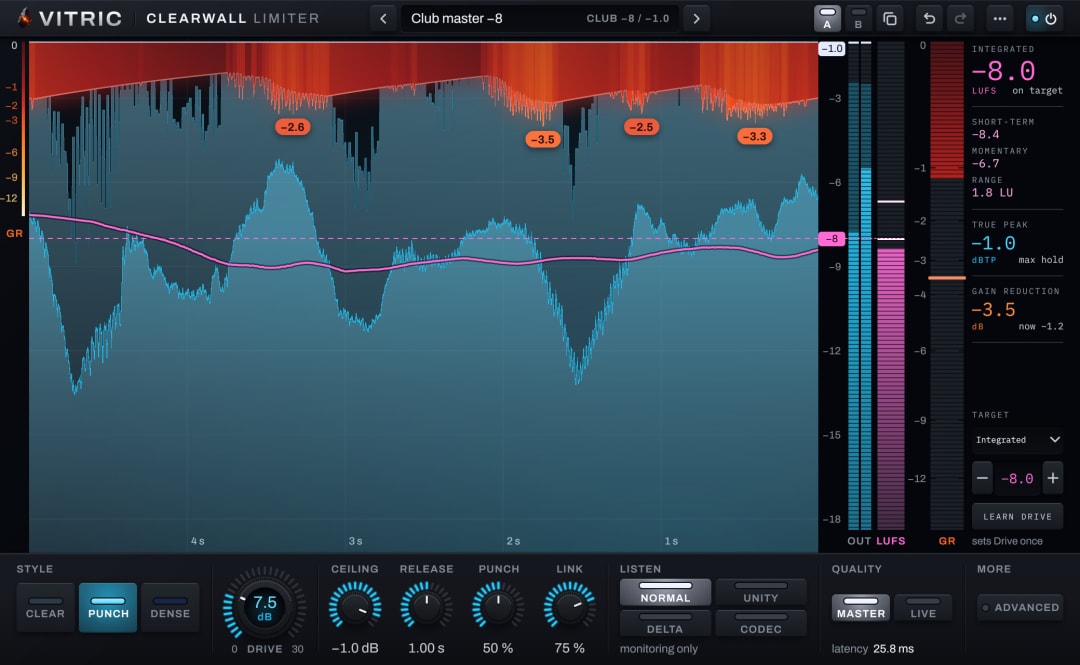
- Clearwall Limiter is a true-peak mastering limiter in three styles, Clear, Punch and Dense. Set a loudness target and Learn Drive sets the Drive to meet it.
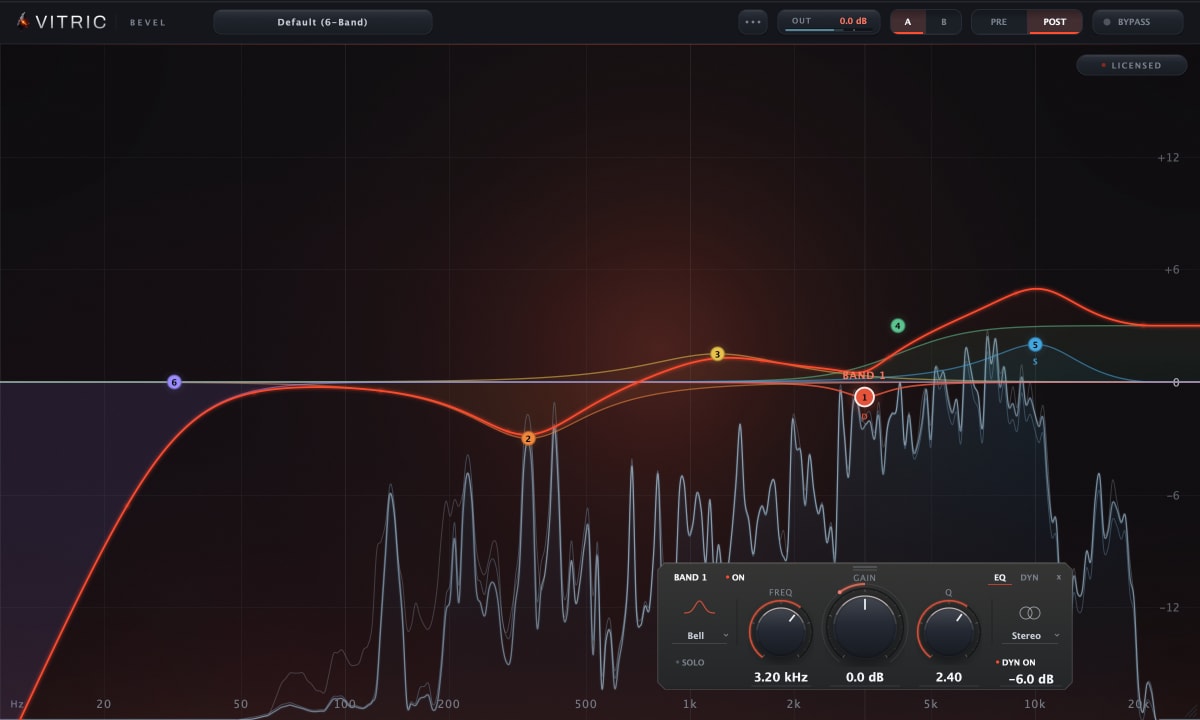
- Bevel EQ works in both steps: each band can be stereo, left, right, mid or side.
Questions
Which comes first, mixing or mastering?
Mixing. Mastering is the last step before release, and it starts from the finished stereo mix.
Is mastering just making a song louder?
No. Loudness is one part. Mastering also sets the tone and the peak level, and on an album the order of the songs and the gaps between them.
Can mastering fix a bad mix?
Only a little. A master works on the whole file at once, so it cannot change one instrument without touching everything around it. Problems with one part are best fixed in the mix.