How to master a song at home: the chain, the targets, the checks
Mastering is the last step: gentle EQ and compression to balance the whole mix, a limiter to set the final level and true peak, then checks against references and on other speakers. Here is a simple home chain, the numbers to start from, and what to listen for.
Mastering is the last step before release. It works on the whole stereo mix at once: small EQ moves to balance the tone, gentle compression to hold it together, and a limiter at the end to set the final loudness and keep the peaks under a true-peak ceiling. Then you check the result against released music and on other speakers. A good master sounds like a better version of the mix, not a different one.
Before you start: prepare the mix
Take the limiter off the mix bus and make sure the mix peaks below about -3 dBFS in its loudest part. Export it as a 24-bit or 32-bit float WAV, without dither: see what dither is. Master in a fresh session, so you hear the song as a whole rather than its parts.
Choose references
Pick two or three released songs in the same style and level-match them to your master as you work. Sound On Sound's Paul White advises always comparing with commercial recordings in a similar style "to ensure your tonal balance is about right". Match their loudness to your master, so you compare tone and punch, not level.
EQ: small and broad
Make small, broad moves: a little more low end, a little less harshness, a touch of air. A fix that needs a narrow or deep cut usually belongs back in the mix. Working in mid and side lets you treat the center (vocal, kick, bass) separately from the sides.
Compression: gentle, at a low ratio
Mastering compression should hold the mix together, not reshape it. John Walden's Sound On Sound walkthrough sets its multiband compressor gently, with "low ratios of the order of 1.2:1 and low thresholds". Engineers differ on the order: Walden puts the EQ first, while Paul White's Sound On Sound advice puts it after the compressor. Both keep the limiter last. Toggle bypass at the same level to hear what each one does.
The limiter goes last
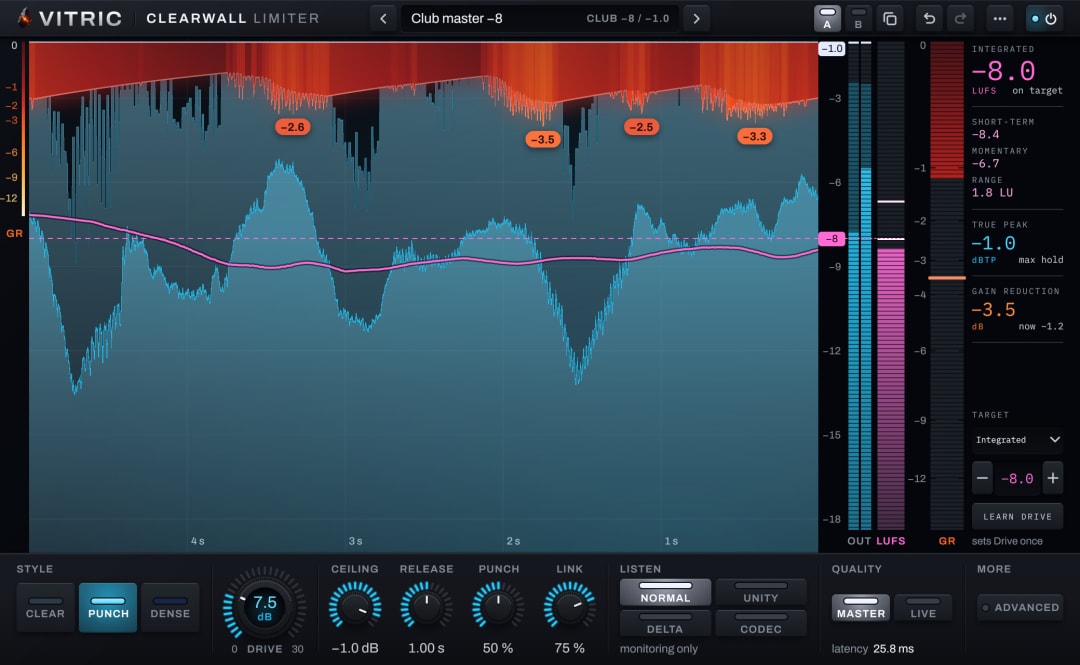
The limiter sets the final loudness and stops the peaks. Use a true-peak limiter, start with its ceiling at -1 dBTP, and lower it for a loud master: Spotify asks for peaks below -2 dBTP when a master is louder than -14 LUFS integrated. Raise the input until the drums start to lose their punch, then back off a little. The guide to what a limiter does covers the controls, and limiters vs clippers covers when to clip first.
How loud should a master be?
There is no single right number. With normalization on, streaming services can turn loud masters down, so -14 LUFS integrated is a useful listening reference rather than a requirement; a dense track may sound right louder. The LUFS targets guide covers each service, and the loudness meter measures integrated LUFS and true peak in your browser.
Dither and export
Dither only when the export has a lower bit depth than the session, such as a 16-bit file from a 24-bit project, and only once, at the very end. Export the master as a WAV; see what dither is.
Check before you release
- Bypass at matched level. The master should sound better, not just louder.
- Against your references, at the same loudness.
- On other systems: headphones, a phone, a car, small speakers.
- As a lossy file. Lossy encoding can add peaks. If you make an AAC or MP3 yourself, decode it and measure the true peak again.
Mastering with Vitric
- Vitric Master masters a mix in your browser with Vitric's own processors, tells you what it changed, and lets you compare with your original at the same loudness. Listening is free, with no account.
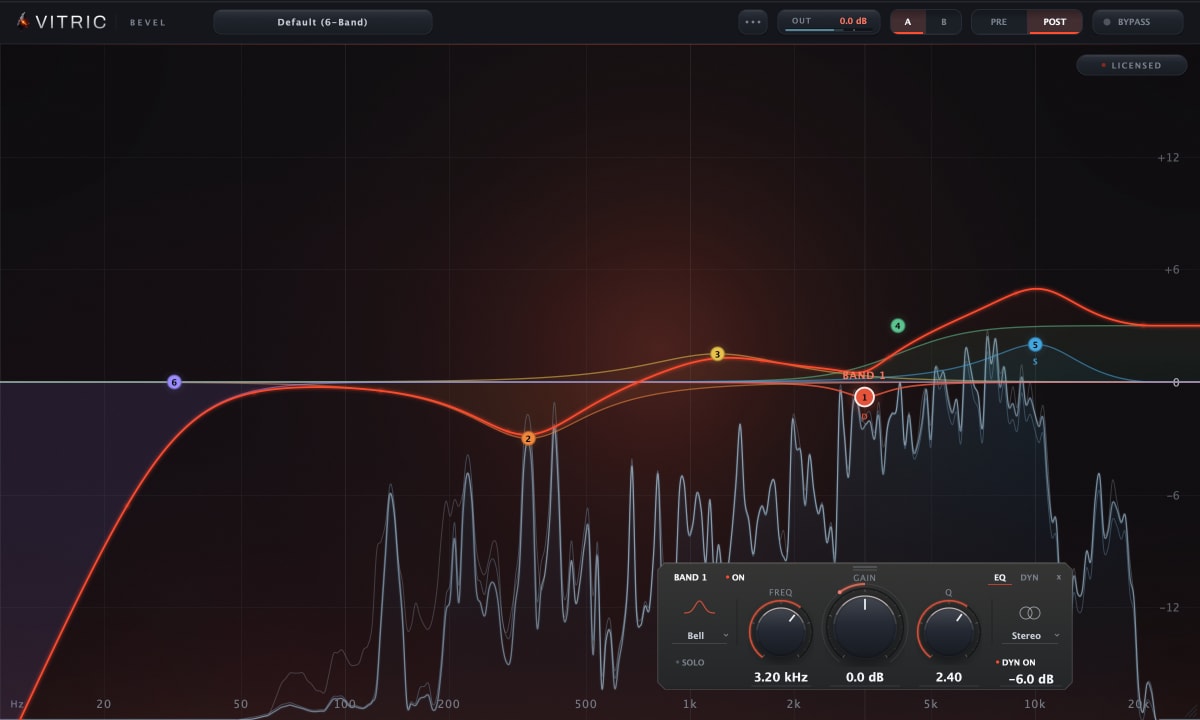
- Bevel EQ places each band in stereo, left, right, mid or side, and can show the spectrum before and after the EQ together.
- Clearwall Limiter is a true-peak mastering limiter in three styles, Clear, Punch and Dense. Set a loudness target and Learn Drive sets the Drive to meet it; Unity lets you judge the result at matched loudness.
Questions
Can I master my own music?
Yes. A simple chain, careful listening and references get a home master a long way. A separate mastering engineer adds fresh ears and a dedicated listening room built for accurate monitoring, which can be worth it for an important release.
What order should a mastering chain be in?
An optional gain stage first, then EQ and compression (engineers differ on which comes first), then the limiter last. Dither goes after the limiter, and only when you reduce the bit depth.
What is the difference between mixing and mastering?
Mixing balances the individual tracks; mastering works on the finished stereo mix, setting its final tone, loudness and peak level for release.