How to make techno: BPM, the techno drum pattern, sound design and arrangement
Techno runs at about 120 to 150 BPM, usually on a four-on-the-floor kick, and puts rhythm and sound design ahead of melody. Here is the basic techno beat as a grid, the tempos of techno and its styles, the classic gear, and how techno producers build a track from one looping bar.
Techno is electronic dance music made for continuous DJ sets, at about 120 to 150 BPM depending on the style. Its beat is usually a repetitive four on the floor in 4/4, and it puts rhythm and synthesized sound ahead of melody: vocals and melodies are uncommon, and repeating sequences of notes often take the place of chord changes. Its first wave came from Detroit in the mid to late 1980s, and Germany grew its own strain alongside it.
Techno BPM
| Style | Typical tempo |
|---|---|
| Techno | 120 to 150 BPM |
| Dub techno | 110 to 125 BPM |
| Melodic techno | 120 to 128 BPM |
| Hardcore (hardcore techno) | 160 to 200 BPM or more |
| House, for comparison | 115 to 130 BPM |
Ableton's Learning Music puts techno and trance together at 120 to 140 BPM. Where a track sits depends on the style of techno; the BPM by genre chart has the neighboring styles.
The techno drum pattern
In its simplest form, techno's beat is the disco pattern that house and trance use too. What sets the original Detroit sound apart is syncopation and polyrhythm: producers often kept the basic pattern as a foundation and added syncopated, polyrhythmic parts with other drum machine voices, which gives it a funky, percussive feel. Most commercial techno has little or no syncopation.
The sound: drum machines, bass lines and synths
The original Detroit producers used the Roland TR-808 and TR-909 drum machines, the TB-303 bass line generator, and synths such as the Roland SH-101 and Yamaha DX7. Software emulations of those machines are popular today. Designing distinctive synth sounds counts for more in techno than harmony does, and filtering is a common process, so sound design and filtering do much of the work.
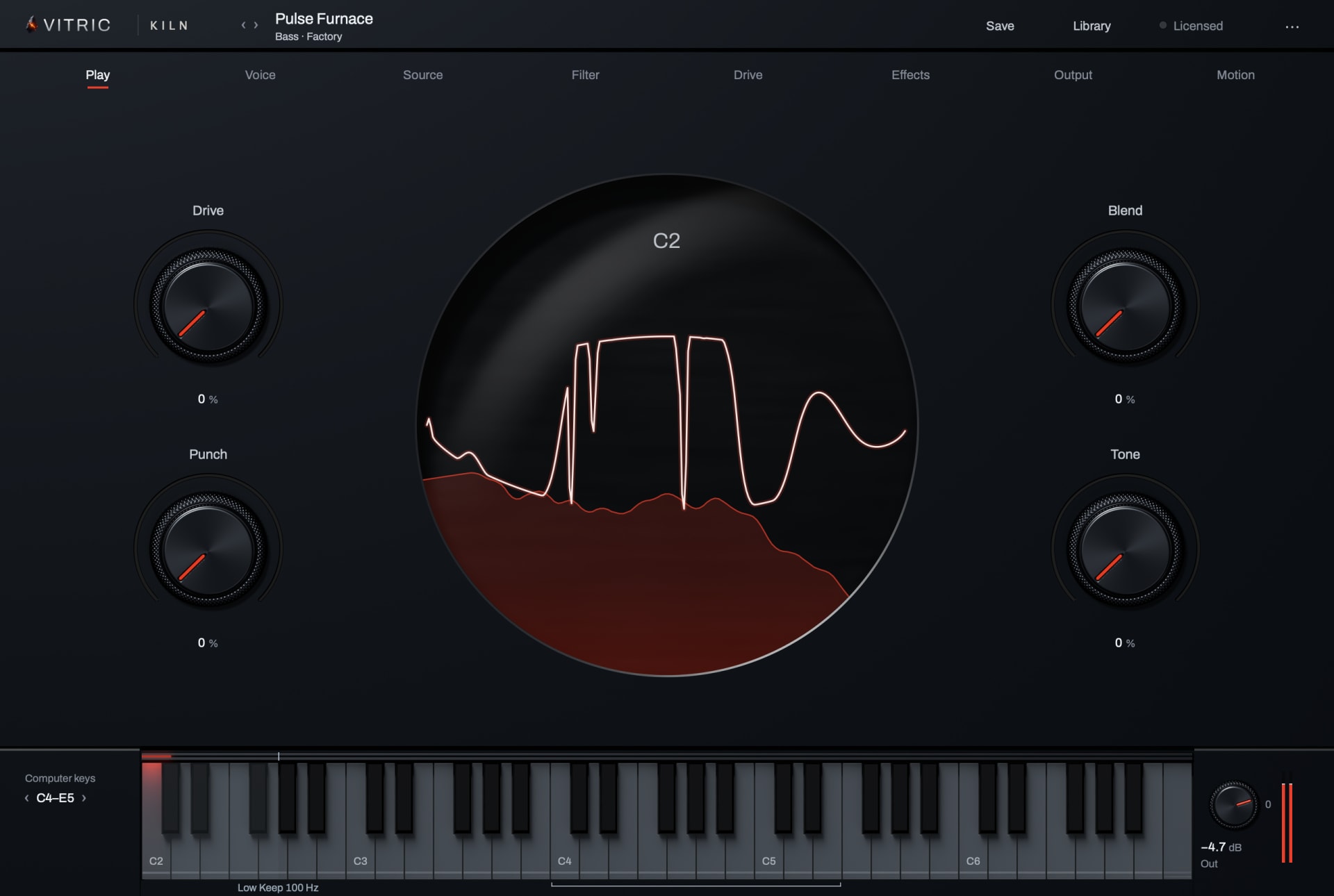
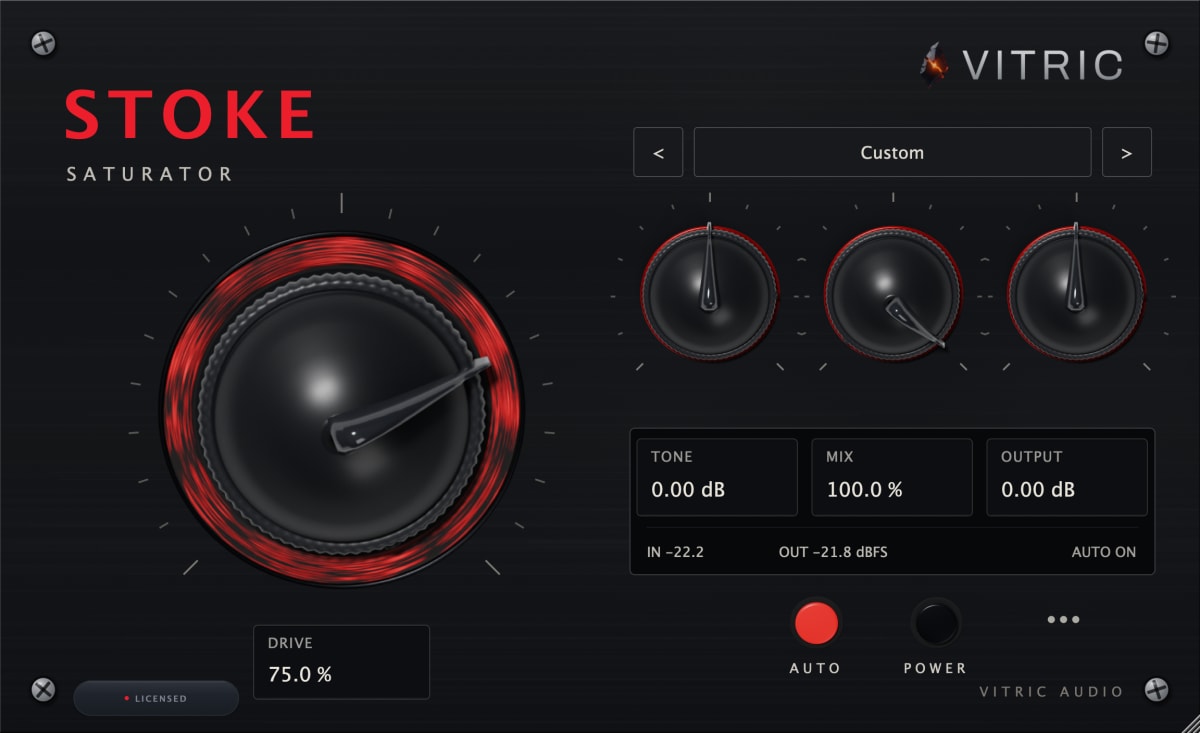
For bass and leads, Kiln Synthesizer gives every voice its own drive after the filter, in six characters such as Soft, Tube and Fuzz, with a Low Keep that holds the sub clean underneath. Stoke Saturator adds harmonic distortion for density on drums and bass; in its tests, synthesized kick and bass signals keep 20 to 120 Hz energy within 0.5 dB at Drive 50%, with Tone and Output neutral. The guide to saturators explains what saturation adds.
How techno producers build a track
- Set the tempo somewhere in the 120 to 150 BPM range and program the beat above.
- Loop one bar, or a short run of bars, and overdub layers on top of it: percussion, a bass line, a repeating synth sequence.
- Add syncopated parts with extra drum voices so the groove moves against the steady kick.
- Once the loop works, plan how it unfolds: bring layers in and out, and move filters and effects over time, by hand on a mixer or with automation in your DAW.
- Keep it lean. Robert Hood's brief for minimal techno was "Just drums, basslines and funky grooves and only what's essential."
Where techno came from, and its styles
Techno's first wave came from Detroit in the mid to late 1980s: Juan Atkins, Derrick May and Kevin Saunderson, known as the Belleville Three, along with Eddie Fowlkes, Blake Baxter and others. After house music took off in Europe, techno grew in the UK, Germany, Belgium and the Netherlands; German writers date their own techno to around 1990, built on Chicago house with Detroit's influence, and by the early 1990s Berlin had become techno's second center. By then techno had split into styles such as acid, hardcore, bleep, ambient and dub techno. Minimal techno, which Detroit producers Robert Hood and Daniel Bell are credited with starting in the early 1990s, stripped the sound back after techno had become, in Hood's word, too "ravey".
Questions
What BPM is techno?
Most techno runs at about 120 to 150 BPM. Dub techno is slower (110 to 125) and hardcore much faster (160 to 200 or more).
What is the difference between techno and house?
Both usually use a four-on-the-floor kick. House came from Chicago, runs 115 to 130 BPM and often has vocals, deep basslines and synth riffs; techno came from Detroit, runs 120 to 150, is mostly instrumental and puts rhythm and sound design first.
Where did techno come from?
Its first wave came from Detroit in the mid to late 1980s, from Juan Atkins, Derrick May, Kevin Saunderson and others; Germany, and later Berlin, grew its own strain from around 1990.