How to make house music: BPM, the four-on-the-floor beat, bass, chords and deep house
House music runs at about 115 to 130 BPM on a four-on-the-floor kick, with claps on 2 and 4, off-beat hi-hats, deep basslines and synth or piano riffs. Here is the beat as a grid, the tempos of house and deep house, the bass and chord patterns, and how to build and arrange a track.
House is electronic dance music built on a repetitive four-on-the-floor beat at about 115 to 130 BPM, typically 120 to 130. The kick plays every beat, claps or a snare land on beats 2 and 4, and hi-hats fill the off-beats; on top go deep basslines, synth riffs and, often, sung or sampled vocals. House started in Chicago in the early to mid 1980s, when DJs began reworking disco records with a more mechanical beat.
House BPM: how fast is house music?
| Style | Typical tempo |
|---|---|
| House | 115 to 130 BPM, typically 120 to 130 |
| Deep house | 110 to 125 BPM |
| Techno | 120 to 150 BPM |
Ableton's classic house example runs at 120 BPM. Pick a tempo in the range and keep it for the whole track; the BPM by genre chart has the neighboring styles.
The house drum pattern
That is the whole skeleton, and it repeats. Ableton's example uses a closed hat; an open hat on the same off-beats is the other classic choice, and Native Instruments' house walkthrough adds shakers between each beat with open hats on top. House drums have almost always come from drum machines, often the Roland TR-808, TR-909 or TR-707, and producers typically use sampled instruments. From there, add syncopation with claps, shakers, snares or extra hi-hats; one of early Chicago house's signature rhythm riffs is built on the clave pattern, and congas or bongos add an African feel.
Bass and chords
House leans on deep basslines and synthesizer riffs, and the low end matters more than the melody. The simplest house bassline plays one note between each beat, on the off-beats, so it answers the kick instead of hitting with it; Native Instruments' example plays an F1 between each beat for eight bars, then lets other parts add the interest. For chords, a short stab rhythm works: the same walkthrough plays an F minor chord on the first, fourth, eighth and twelfth 16th notes of the bar and a G# minor on the fifteenth.
Garage house, from New York and New Jersey, leans on gospel-influenced piano riffs and female vocals. Deep house sits a little lower, typically 110 to 125 BPM, and grew from the lush chords of 1980s jazz-funk: muted basslines, soft pads, advanced chords and soulful vocals, with steady, hypnotic repetition instead of the big build-up and release of other dance styles. Tech house is house with a strong techno influence: rugged basslines and steely beats over the harmonies and grooves of progressive house.
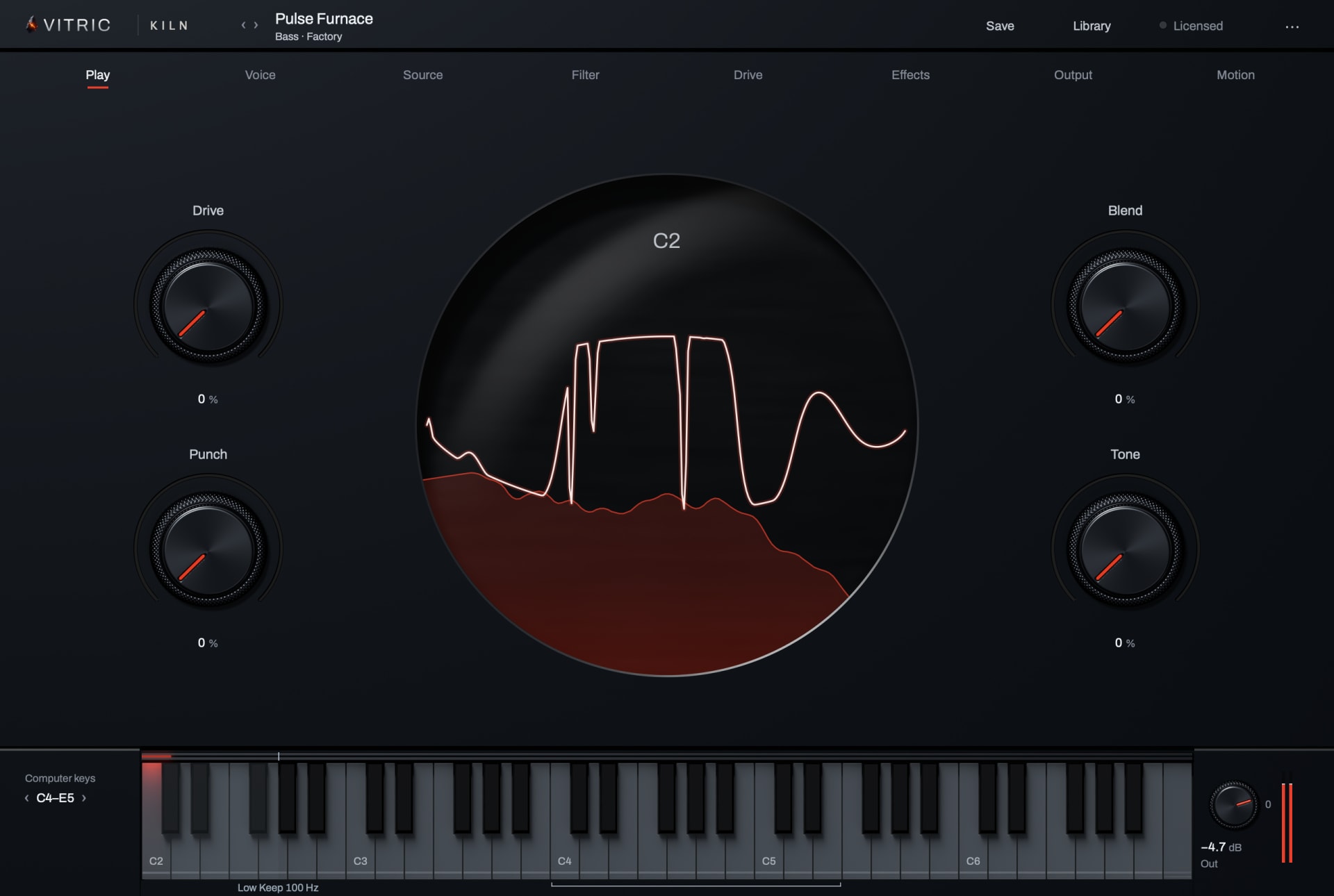
For the bass, Kiln Synthesizer has a bass engine, and in Poly mode its Chord Glide slides each note of a chord from the nearest note of the chord before, which suits smooth pad changes in deep house. For chords that fit your key, see chord progressions in every key.
Make room for the kick, or make it pump
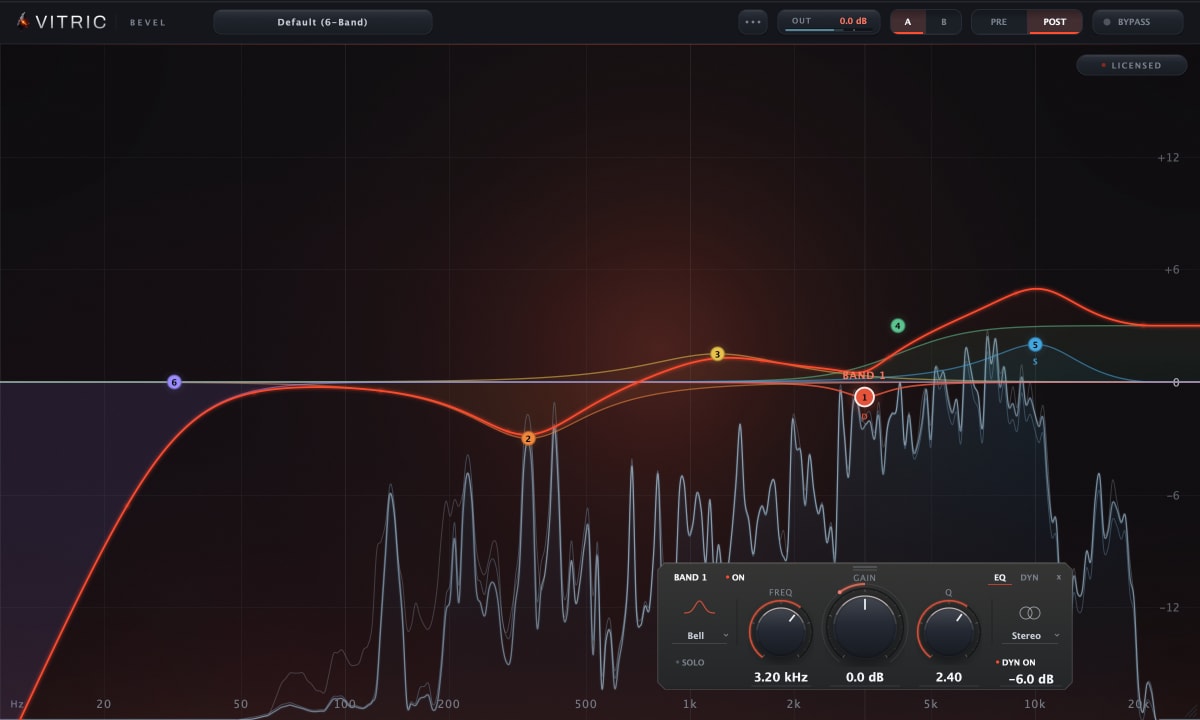
With a kick on every beat, the kick and bass share the low end four times a bar. In electronic dance music, sidechaining is often used on basslines, controlled by the kick, to stop the two clashing and to give the sound a pulsing, rhythmic feel; many dance producers push it until the whole mix pumps in time with the beat. Bevel EQ can do the clean version in VST3 and AU hosts: put it on the bass, add a low shelf with DYN on, right-click the band and choose Dynamic source, External sidechain, then route the kick to Bevel's sidechain input so the shelf dips only while the kick plays. The sidechain compression guide covers the compressor version and the routing in FL Studio, Ableton Live, Logic Pro and Pro Tools.
How to make a house track, step by step
- Set the tempo between 120 and 130 BPM (110 to 125 for deep house).
- Program the kick, clap and off-beat hi-hat from the grid, then add shakers or percussion for syncopation.
- Write a bassline on the off-beats, between the kicks, and a chord stab or loop on a synth or piano.
- Add a hook: a synth riff, a vocal or a vocal sample.
- Duck the bass under the kick so both stay clear, or let it pump.
- Arrange it: work in blocks of 4, 8 or 16 bars, and build up slowly by adding layers of sound and texture. Native Instruments' outline is intro, verse, build, drop, break, second verse, second build, second drop and outro. House is made to be mixed from one track into the next, so give the start and the end room to blend; the outro tells a DJ to get the next track ready.
House vs EDM vs techno
EDM, electronic dance music, is the broad family of percussive electronic genres made for clubs, raves and festivals and usually played in DJ mixes; house is one of the first of them. In many EDM styles the high point is the drop: a sudden change of rhythm or bass line after a build-up and a break, and usually the loudest part of the track. Techno is another EDM family: its first wave came out of Detroit in the mid to late 1980s, it runs from 120 to 150 BPM, often on the same four-on-the-floor beat, and it puts rhythm and synthesized sound ahead of vocals and melodies, which are uncommon.
Questions
What BPM is house music?
About 115 to 130 BPM, typically 120 to 130. Deep house sits lower, at 110 to 125.
What is the house drum pattern?
A kick on every beat (four on the floor), a clap or snare on beats 2 and 4, and hi-hats on the off-beats.
What is the difference between house and deep house?
Deep house is slower (110 to 125 BPM), with muted basslines, soft pads, jazz-funk chords and soulful vocals, and it avoids the big build-up and release of other dance styles.
Is house music EDM?
Yes. EDM is the umbrella term for electronic dance music, and house is one of its oldest styles.