Glue compression: compressing the mix bus so the mix holds together
Glue compression is a gentle compressor across a mix or a group, so the parts move together. Here is what it does, the settings to start from (a low ratio, a slower attack and a couple of decibels of reduction), and when to leave it off.
Glue compression is a gentle compressor on a group of tracks or the whole mix. Because one compressor reacts to everything at once, the parts rise and fall together and sit as one performance instead of separate tracks. It is a small move: a low ratio and a couple of decibels of gain reduction.
What glue does
A gentle compressor across a group evens out the level of the whole, so a loud snare also nudges the cymbals and the room down a little, and the quiet parts between hits come up relative to the peaks. The kit stops sounding like separate mics and starts sounding like one drum set. In a Sound On Sound review of an SSL-style bus compressor, just a little drum bus compression made the drums sit together without losing the kick's thud or the snare's smack.
Settings to start from
- Ratio: 2:1. In a Sound On Sound review of an SSL-style bus compressor, 2:1 gave relatively subtle soft-knee compression; 4:1 was more obvious, and 10:1 was basically a peak limiter.
- Attack: slowish, around 10 ms, so the front of each hit gets through before the compressor reacts and the mix keeps its punch.
- Release: auto if the compressor has it, or a medium setting that lets the meter settle back between beats.
- Amount: about 2 dB of gain reduction on the loudest parts. The same review ran a full mix at 2:1, 10 ms attack and auto release with about 2 dB of compression.
Then match the level and switch the compressor in and out. If the mix only sounds better because it is louder, the compressor is not doing anything useful.
Drum bus or mix bus?
A drum bus is the easiest place to hear glue, because drums have the biggest peaks. The same settings work on a vocal group or a music bus. On the whole mix, stay at the gentle end, 1 to 2 dB, because every move affects everything.
When to leave it off
In Sound On Sound, mix engineers Marc Roehm and Jochen Weyer advise against compression and limiting on the master bus while you are learning to mix, because it can upset the balance you built and cause pumping or distortion. Once the mix works without it, add glue and judge it at matched level. A mix bus compressor is not a mastering limiter: see what a limiter does and how compression works.
Glue with Caliper
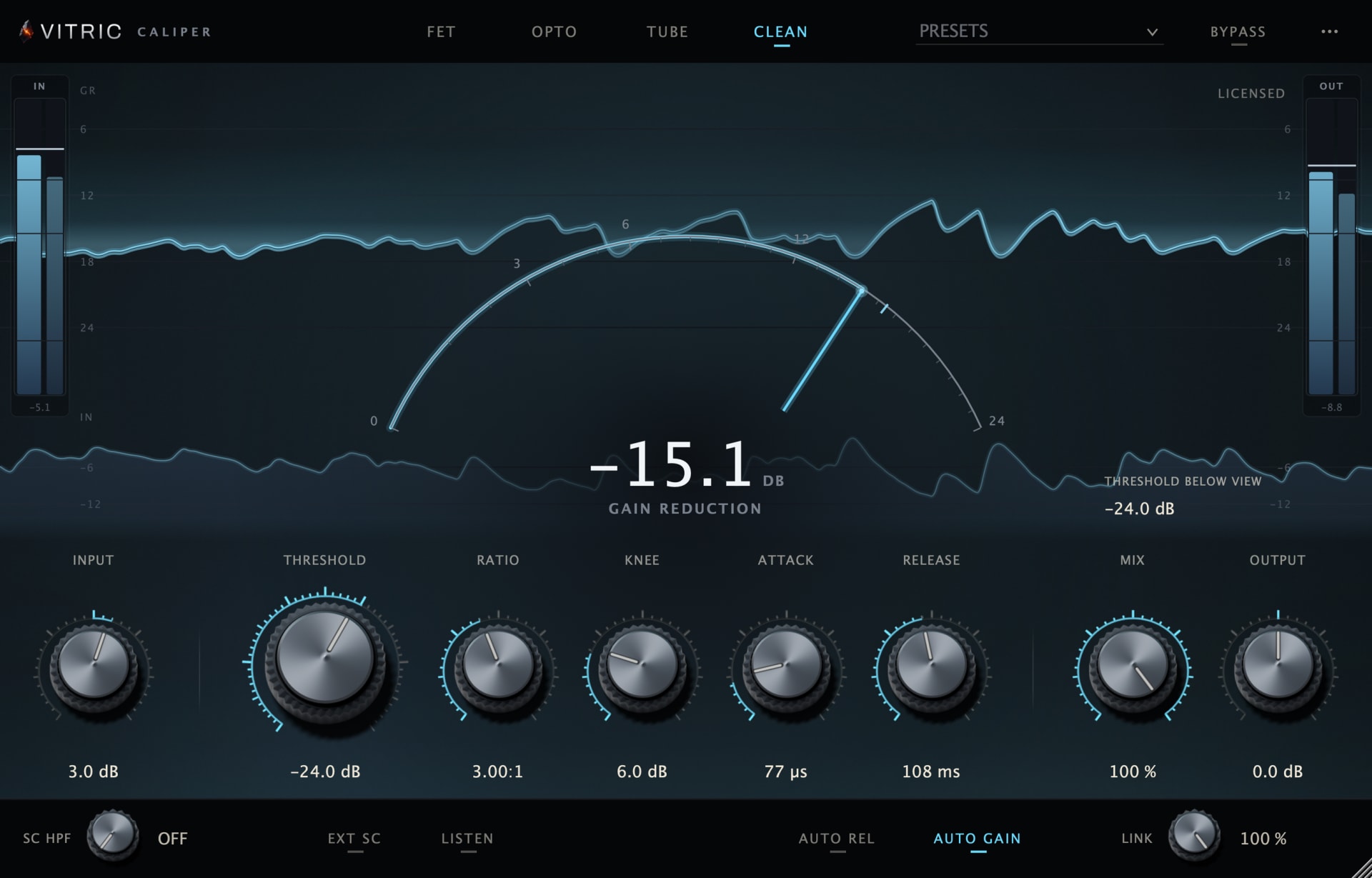
Caliper Compressor's Tube mode suits a gentle bus move: a soft 10 dB knee, a 1.5 to 10:1 ratio, 0.5 to 300 ms of attack and Auto Gain to make up the level. Compare the result with bypass at a similar level. Its Clean mode has threshold, ratio, knee, attack and release controls for transparent control, and every mode has a Mix knob if you want to blend the glue in parallel. For a drum bus, the Drum Bus - Glue preset starts in Clean mode at 2:1 with a 12 dB knee, a slow attack, auto release and Auto Gain.
Questions
What is a glue compressor?
Any compressor set gently across a group or a mix to make the parts move together. The term is closely linked with SSL-style bus compressors.
How much gain reduction for glue?
About 2 dB on the loudest parts, as in the review above; the compression guide suggests 1 to 2 dB at 2:1 for a bus. Much more and it starts to sound like an effect.
Should glue compression go before or after EQ on the mix bus?
Either works. Try the compressor first so EQ moves do not change how hard it works, and compare both orders at matched level.