Vocal doubling and backing vocals: double tracks, harmonies and ad-libs
Doubling a vocal means singing the part again and playing both takes together, for a thicker or wider sound. Here is how to record and place doubles, when to keep them tight or wide, and how harmonies and ad-libs fit around the lead.
Doubling a vocal means recording the same part again and playing both takes together. The two takes never line up exactly: small differences in attack and timing make the vocal sound thicker, or wider when the takes are panned apart. Backing vocals go further, adding harmony, answering the lead, or filling the gaps with ad-libs.
Why doubling works
When a singer sings along with their own recorded take, the small variations in attack and timing keep the takes from lining up, and together they sound bigger than either take alone.
Engineers have long looked for shortcuts. Automatic double tracking was developed at Abbey Road Studios by engineers recording the Beatles in the 1960s, using variable-speed tape machines to imitate a second take. Later delay devices could imitate ADT's sound but not copy it exactly, and ADT never matched a real second take: listeners still hear one doubled track.
How to record a double
- Sing the same line again, matching the lead's phrasing. Writing about rap vocals in Sound On Sound, Mike Senior notes that a double does not have to be as word-perfect as the lead: the second-best take is usually fine.
- Prefer a real take to an effect. Senior's advice is to re-record the line, or use an alternate comp of the lead, rather than rely on a processor.
- For a featured double, try a second singer whose voice is quite different in pitch and tone.
How to pan and balance doubles
It depends why you are doubling. A tight double, edited close to the lead and kept lower in level, tends to sound like one singer with a chorus-like thickness. Looser doubles at even levels sound like two singers, which can suit a big sing-along hook.
If you pan a pair of doubles to opposite sides, keep both at the same level, or the vocal leans to one side. Doubles panned to the extremes come through about 3 dB quieter when the mix is summed to mono, and their chorus-like blur comes back, so check in mono the moment you start panning them.
In rap, a popular technique is to ride the double's level in the mix, bringing it up to accent certain words and phrases. For the rest of the vocal chain, see how to mix vocals.
Harmonies and backing vocals
Backing vocals sing harmony with the lead, a counter-melody, or a lead-in before the lead comes in. They can enter mid-line or answer after the lead has sung, and they are often more muted or pitched up so they support the lead instead of competing with it. Some lead singers record their own backing parts, because parts sung by the same voice blend well.
Ad-libs
Ad-libs are short improvised words and sounds around the lead: a shout at the end of a line, an answer in a gap, a hype word on the beat. Keep them below the lead and away from its words, so they add energy without covering the lyric. Placing them off center, as in the figure, is one common choice.
Doubling with Burnish
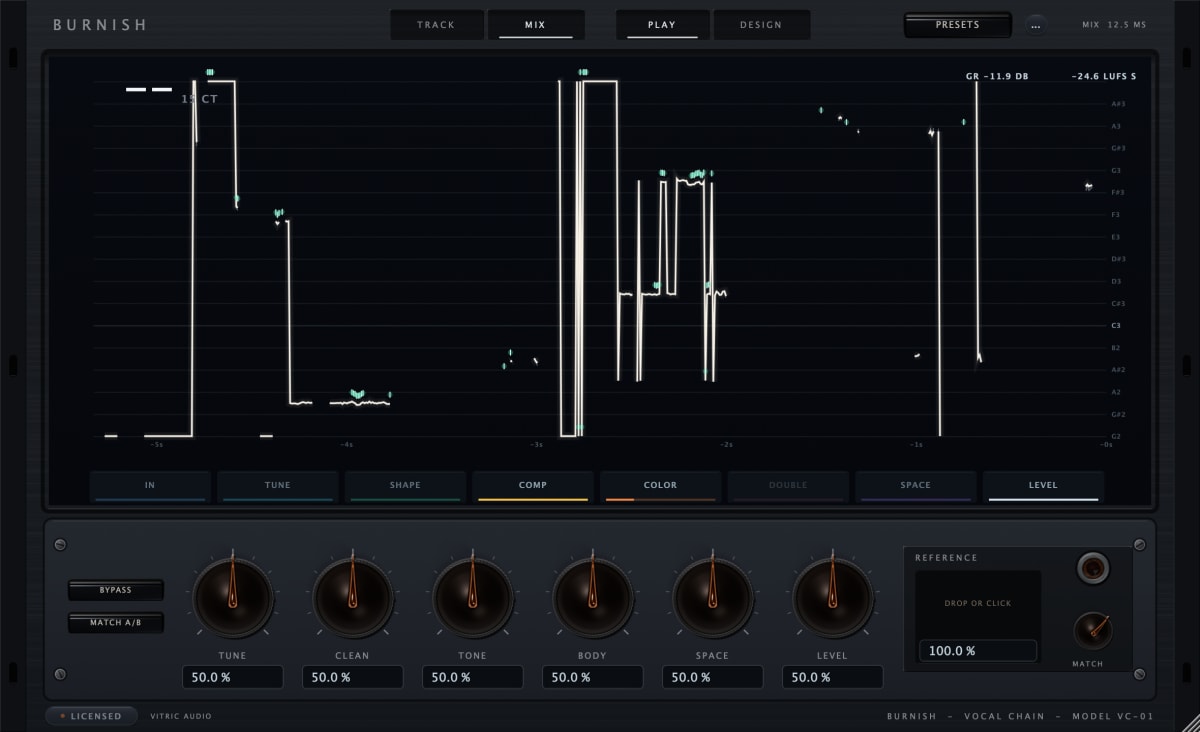
Burnish Vocal Chain is a vocal chain plugin with pitch correction, EQ, compression, saturation, doubling, delay and reverb. Its DOUBLE station adds two or four doubled voices, with detune, timing, per-voice tone tilt (FORMANT), width and level controls. Use it to add width around the lead when there is no second take, and check the result in mono. Put it on a stereo track, or the doubled width collapses.
Questions
How loud should a vocal double be?
For thickness, lower than the lead. For a wide pair panned left and right, the two doubles at the same level as each other.
What is the difference between doubling and harmonies?
A double sings the same notes as the lead. A harmony sings different notes that fit the chord.
Should doubles be panned hard left and right?
For width, often yes. For a thicker lead that still sounds like one singer, keep a single tight double in the center under the lead.