Low-pass, high-pass and band-pass filters, explained
A low-pass filter keeps the frequencies below its cutoff and removes the highs; a high-pass filter keeps the frequencies above it and removes the lows; a band-pass keeps one band. Here is how cutoff, slope and resonance work, and where each filter goes in a mix or a synth.
A filter turns down every frequency on one side of a point called the cutoff. A low-pass filter lets the lows pass and removes the highs, which is why audio gear also calls it a high-cut. A high-pass filter does the opposite: it keeps the highs and removes the lows, a low-cut. A band-pass filter keeps one band in the middle and removes both sides. Three settings describe any of them: the cutoff, the slope and the resonance.
What does a low-pass filter do?
It passes everything below the cutoff and turns down everything above it. With no resonance, the cutoff is where the level is already 3 dB down, half the power, so the turn begins a little before the number on the knob; turn resonance up and the level at the cutoff rises into a peak instead. Well above the cutoff, a second-order low-pass falls 12 dB per octave. Low-pass filters feed subwoofers, sit behind the tone knob of an electric guitar, and do much of the tone shaping in a subtractive synthesizer.
In a mix, a low-pass cleans up a part whose top end is only hiss or fizz, such as a distorted guitar or a noisy sample, and it can push a part back in the mix: Sound On Sound's tip for depth is to cut the highs on reverbs and delays.
What does a high-pass filter do?
It is the mirror image: it passes everything above the cutoff and turns down the lows. Vocals, guitars, pads and hi-hats often carry low-end rumble they do not need, which eats headroom, so a high-pass somewhere between 30 and 100 Hz, set by ear on each track, clears it. On a vocal, start around 60 to 100 Hz at 12 dB per octave, raise the cutoff until the voice starts to lose weight, then back it down. The EQ frequency chart shows where each instrument lives before you choose.
What does a band-pass filter do?
It keeps a band of frequencies and turns down both sides, like a high-pass and a low-pass in series. Its bandwidth is the distance between the lower and upper cutoffs, and its Q is the center frequency divided by that bandwidth: a high Q keeps a narrow band, a low Q a wide one. A classic use is the telephone voice: telephone lines carry roughly 300 to 3,400 Hz, so a band-pass over that range makes a vocal sound like it is on a call.
What is filter slope?
The slope says how fast the level falls past the cutoff, in decibels per octave. Each filter order adds 6 dB per octave, so common slopes are 6, 12, 24 and 48 dB per octave. A gentle slope sounds natural and leaves some of the removed range behind; a steep slope cuts close to the cutoff and removes more of what you do not want. Use gentle slopes for tone and steep ones for cleanup.
| Filter | Keeps | Also called | Common use |
|---|---|---|---|
| Low-pass | Below the cutoff | High-cut | Taming hiss, darkening, synth tone |
| High-pass | Above the cutoff | Low-cut | Clearing rumble and mud |
| Band-pass | One band | Bandpass, BPF | Telephone voice, effects |
What is resonance on a filter?
Resonance, or Q, boosts a narrow peak right at the cutoff before the slope begins. A little makes a filter sound more pronounced; a lot gives the whistling, vocal sweep of a synth filter as the cutoff moves. On some filters, turning resonance all the way up makes the filter ring on its own at the cutoff frequency, so it plays a pitch. Sweep the cutoff with an envelope or an LFO and you have most of the movement in synth sounds: see what is a synthesizer.
Filters in Vitric plugins
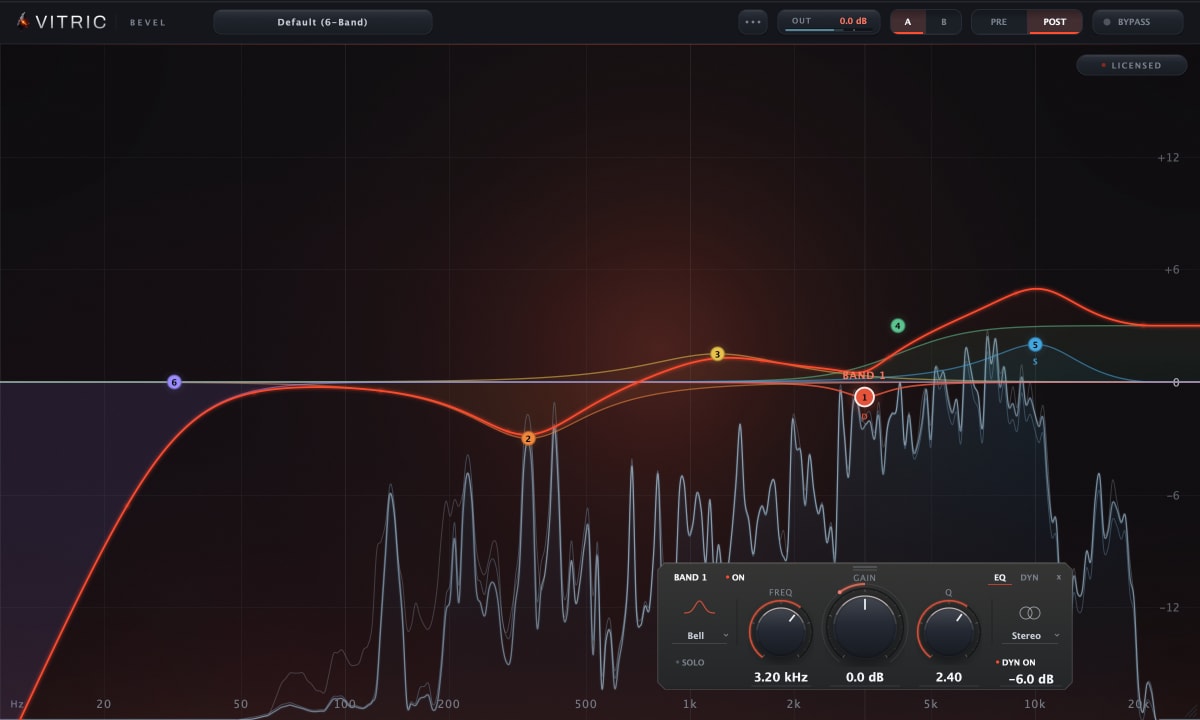
- Bevel EQ: any of its 24 bands can be a high-pass or low-pass, with slopes from 12 to 96 dB per octave.
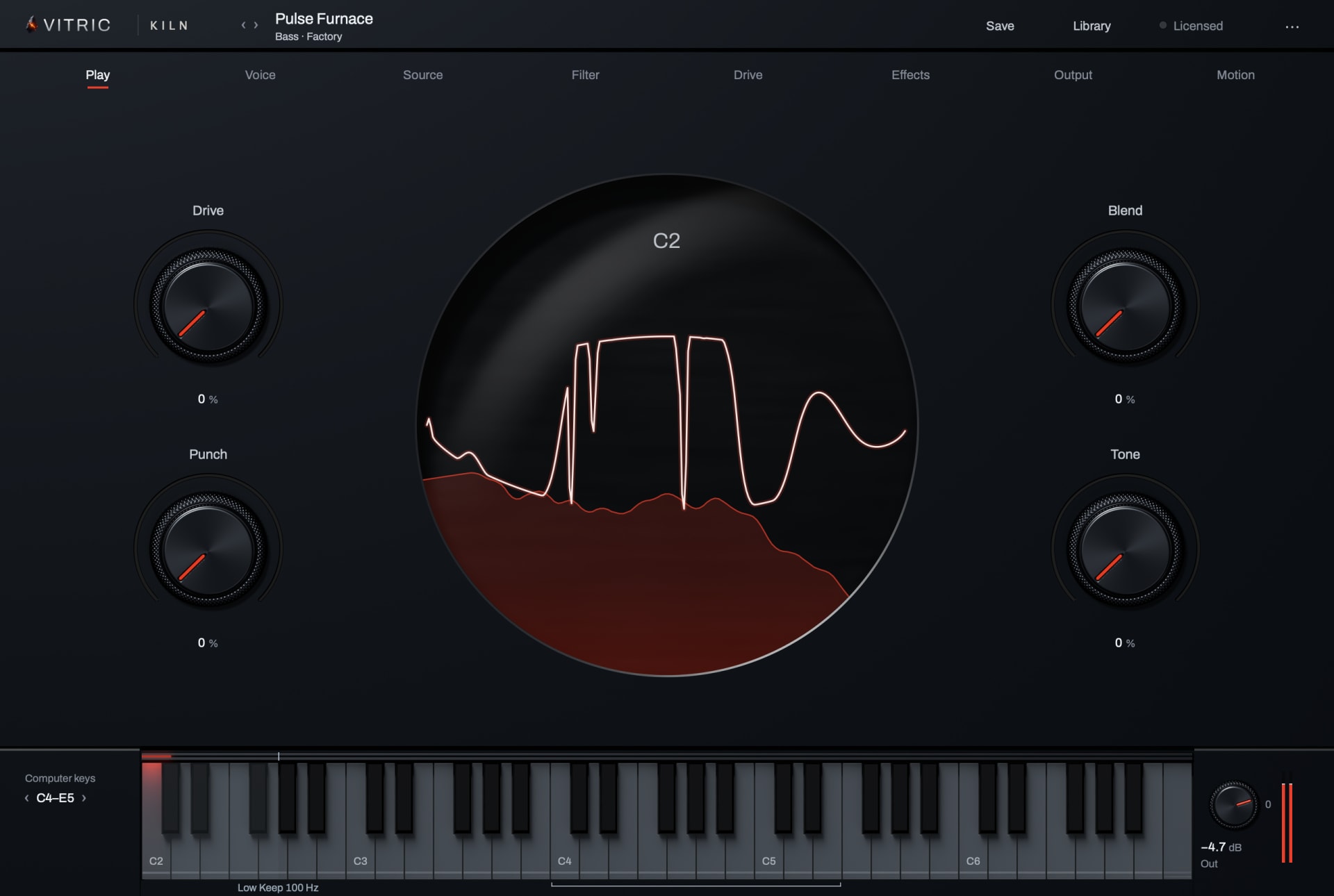
- Kiln Synthesizer: two filter slots, each SVF, ladder, comb, formant or Glass. The ladder self-oscillates in tune within plus or minus 0.1 cents across five octaves.
Questions
Is a high-pass filter the same as a low-cut?
Yes. A high-pass passes the highs, which means it cuts the lows; both names describe the same filter. A low-pass is a high-cut.
What frequency should I high-pass vocals at?
Start around 60 to 100 Hz with a 12 dB per octave slope, then set it by ear: raise it until the voice thins, then back off. A low voice may need a lower cutoff.
What does a low-pass filter sound like?
Darker and further away: the top end goes first, then, as the cutoff comes down, the sound turns muffled.
What does the cutoff frequency mean?
With no resonance, the point where the filter has turned the signal down by 3 dB; with resonance, the level there peaks instead. Well past it, the level falls at the filter's slope.