Mono vs stereo: what each means, and why you check a mix in mono
Mono is one channel, heard as if from one position; stereo is two channels that place sounds from left to right. When a stereo mix is played in mono the two sides are added together, and anything that differs between them can cancel.
Mono is one channel of audio, heard as if it came from one position. Stereo is two channels, left and right, that let a mix place sounds across the space between two speakers or headphones. Most music is mixed in stereo, but it still gets played in mono, and when it is, the left and right channels are added together. Whatever differs between the two sides can then cancel.
What is mono?
Mono, short for monophonic or monaural, is sound meant to be heard as if from one position. Nearly all records were mono until the late 1950s, and mono records had almost disappeared in the US by the end of 1967. Mono is still normal for phone calls and most AM radio, and common in public address systems and background music services; any device with a single speaker plays one channel.
What is stereo?
Stereo uses two independent channels to give a sense of direction. The British engineer Alan Blumlein, at EMI, filed the patent behind modern stereo in December 1931, and the first mass-produced stereo record came out in November 1957. A sound that is identical in both channels appears in the middle, between the speakers; the more it differs, the further it moves to one side or spreads out.
What happens when a stereo mix is played in mono?
The two channels are added into one. A sound in the middle simply adds to itself. A sound that is different on each side can partly cancel, and folding stereo down to mono can muffle the result through phase cancellation. A common case is a part widened with a short delay on one side, the Haas trick. In mono, the dry and delayed copies cancel at a whole row of frequencies.
Stereo wideners and chorus can do the same, depending on how they work. The delay calculator lists the first notch for common Haas delays.
Why check your mix in mono?
- Parts that vanish. A widened guitar or synth that drops in level or turns hollow in mono is cancelling. Narrow it, shorten the delay, or use a different way to widen it.
- The low end. Bass and kick that are wide or out of phase lose weight in mono. Keep the sub in the middle.
- The balance. Stereo can hide a masking problem that mono reveals: two parts that sat apart left and right now fight in the same place.
- Real playback. A single-speaker device or a mono PA plays your mix this way.
What should be mono and what should be stereo?
| Usually mono, in the middle | Often stereo or panned |
|---|---|
| Kick, snare, bass, sub | Drum overheads and room mics |
| Lead vocal | Backing vocals and doubles |
| The lowest octave of anything | Pads, keys, reverb and delay returns |
A single microphone records in mono, so most vocals, basses and single instruments start as mono tracks. Panning places a mono track in the stereo field without making it wider.
Mid and side
Mid/side is another way to describe a stereo signal: the mid is what both channels share, the side is what differs between them. Mono playback keeps only the mid, which is why mid/side processing stays mono compatible: you can change the width by turning the side up or down without touching what a mono listener hears.
Mono and stereo tools in Vitric plugins
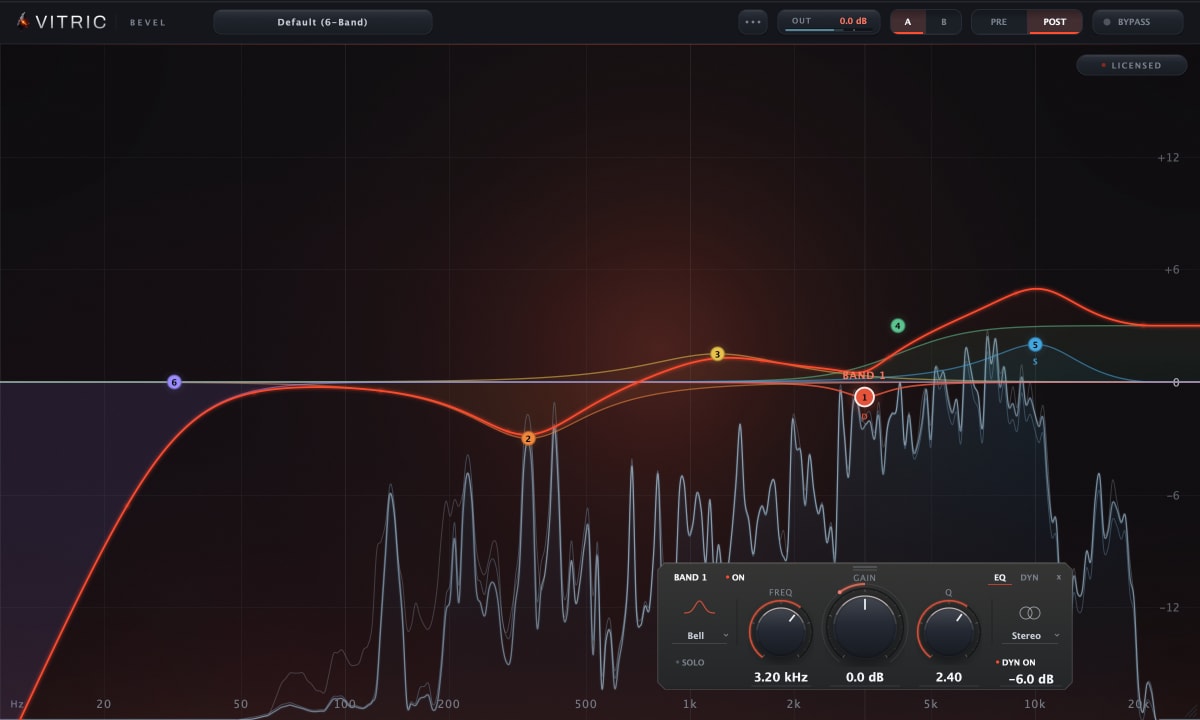
- Bevel EQ places each band in stereo, left, right, mid or side, and its mono-maker folds the low end to mono below a corner you set from 20 to 500 Hz, at 24 dB per octave.
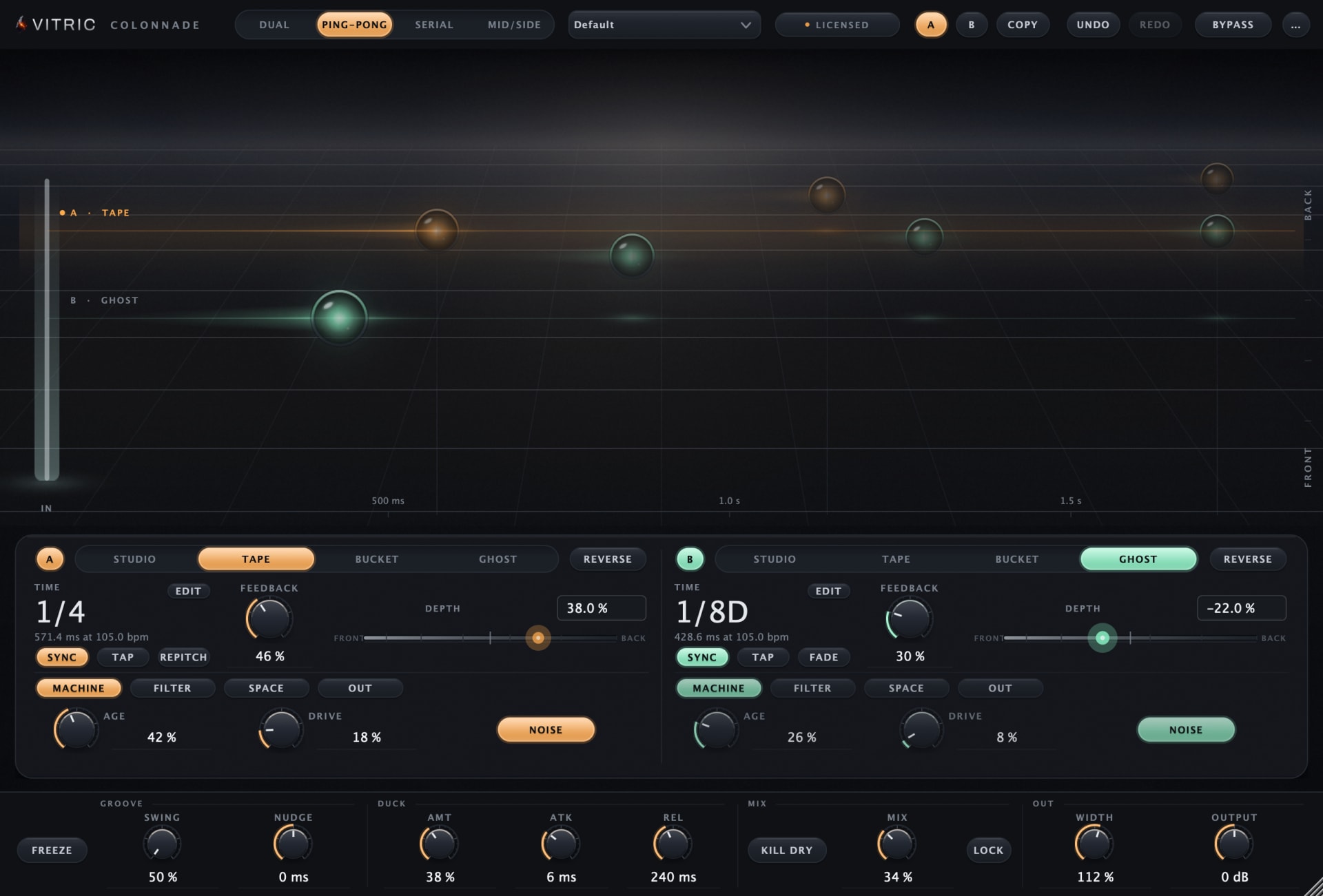
- Colonnade Delay's Mid/Side routing puts engine A on the center and engine B on the sides, with B's WIDTH setting how wide the side echoes are.
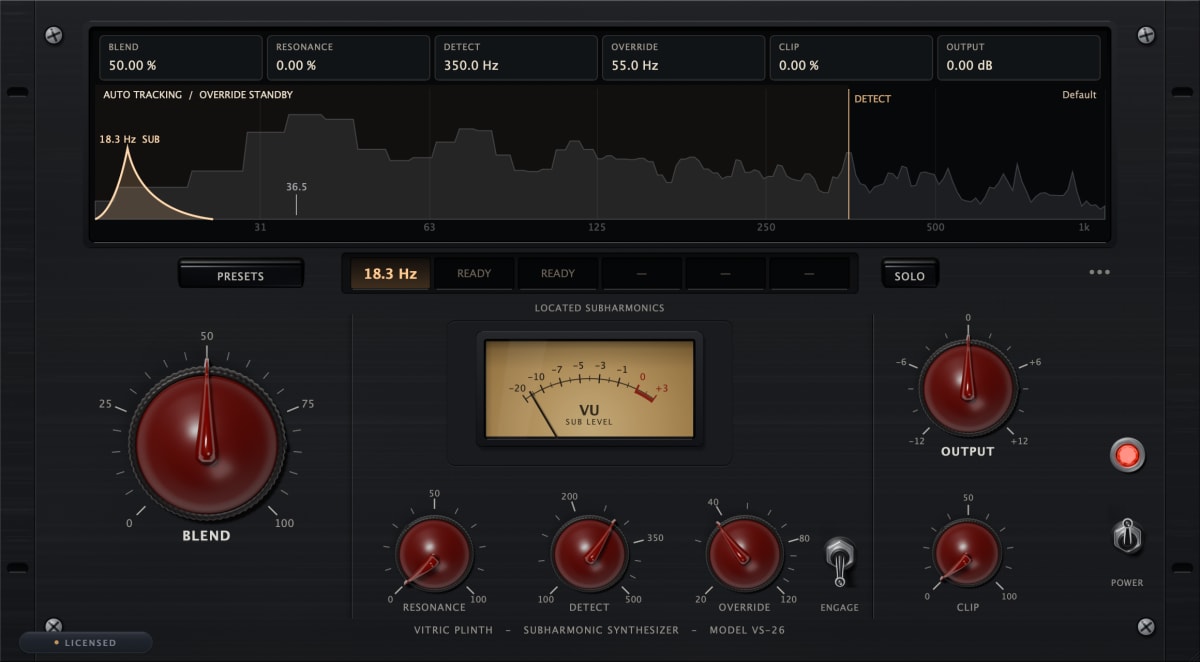
- Plinth Subharmonic Synthesizer generates its sub in mono, dead center.
Questions
Is mono or stereo better?
Neither. Stereo gives a mix width and separation; mono is what some playback reduces it to. A good stereo mix still works in mono.
Should I record vocals in mono or stereo?
Mono, with one microphone, for a lead vocal. Width comes later from doubles, harmonies, reverb and delay.
Why does my mix sound different in mono?
Something in it differs between the left and right channels and partly cancels when they are added: usually a Haas delay, a stereo widener, chorus or a phase problem between two microphones.
How do I check a mix in mono?
Use your DAW's mono button or a utility plugin on the master that sums left and right, and listen at the same level you mix at.